RFID Industry Banner

RFID Industry

RFID technology for industrial applications

Dipole has been the pioneer in the use of RFID technology for industrial applications and optimisation of production processes. Obtaining higher productivity, reducing direct manpower in processes that do not add value to the product and achieving a clear improvement of schedules and forecasts is a fundamental part of being competitive in today's world.

Capturing data where it is not humanly possible and tracking time, with its traceability and added features, are some of the key contributions of RFID technology in industrial processes.

RFID Industry

Processes where RFID adds value

  • In the supplies of production lines
  • Process control of each production line
  • Asset management or asset-tracking
  • Gain complete visibility of the productivity
  • Place alerts at strategic points to avoid production errors
  • Carry out the packaging with all associated production data
  • Integrate real-time movements and data with your IT system, ERP, MES, WMS or other systems

There is no doubt that the emergence of RFID technology applied to the industrial sector has optimised and added dynamism to all the processes of the chain, from start to finish. Some of the processes where RFID adds value are:

RFID Pharmaceutical Industry

Industrial traceability of materials, parts, and products

  • RFID traceability of raw materials, parts, and finished products
  • RFID identification of lots, series, and industrial references
  • RFID traceability by process, line, or production phase
  • Incident, non-conformity, and industrial recall management
  • Documental control and evidence of traceability

Production, WIP and industrial process control

  • RFID Work in Process — WIP — in production
  • RFID validation of productive operations
  • RFID control in production lines and workstations
  • RFID sequencing and optimization of internal flows
  • RFID quality control at critical points of the process
  • Error reduction, rework, and line downtime

Inventory, warehouse and industrial logistics

  • RFID inventory management for industries
  • RFDI reception control of materials and suppliers
  • RFDI material, pallets and location tracking
  • Order preparation, kits and materials for production
  • RFDI load and shipment verification
  • Automated internal movements

Industrial assets, maintenance and digital integration

  • RFID tracking of industrial assets
  • RFID management of reusable and returnable assets
  • RFID control of tools, molds, and fixtures
  • Industrial RFID for maintenance
  • Reduction of asset losses and operational costs
  • RFID integration with ERP, WMS, MES, and industrial systems

Industrial RFID Applications

Manufacturing industry

Production control, inventory, WIP, warehouses, shipments, quality and industrial assets.

Metalurgy and metal fabrication

Identification of metal parts, lots, treatments, locations, tools and shipments.

Chemistry and petrochemistry

Traceability of raw materials, packaging, assets, lots, security, warehouse and regulatory compliance.

Manufacturers of machinery

Component control, subassemblies, tools, production, assembly, spare parts and shipments.

Electrónica y tecnología

Trazabilidad de componentes, números de serie, inventario, calidad, producto terminado y logística.

Aeronáutica y ferroviario

Quality critical part control, documentation, lots, maintenance, assets and quality traceability.

Renewable Energies

Tracking of components, assets, tools, materials, warehouses and field operations.

Industrialized construction

Control of prefabricated components, materials, molds, assets, warehouses and deliveries to site.

Defense

Asset traceability, equipment, critical components, warehouses, maintenance and controlled movements.

Glass, cardboard, plastic and packaging

Container identification, materials, reusable assets, classification processes and traceability.

Recycling and circular economy

Container identification, materials, reusable assets, classification processes, and traceability.

Minería e industria extractiva

Asset control, tools, spares, materials, warehouses and maintenance in demanding environments.

Benefits of RFID Technology in the Industry Sector

Greater industrial traceability

More precise tracking of materials, parts, lots, products, assets, and processes.

More reliable inventory

Updated visibility of actual stock in warehouses, production lines and logistics zones.

Less manual errors

Automation of readings, validations and records in reception, production, warehouse and dispatch.

More control of production

Real-time information about products in progress, production phases, operations, and states.

More logistical efficiency

Receivances, internal movements, order preparation and faster and safer shipments.


Reduction of asset losses

Control of tools, molds, containers, cars, racks, reusable fixtures and equipment.

Data connected to existing systems

Integration with ERP, WMS, MES, GMAO or other industrial platforms.

Decisions based on real data

Major visibility to detect bottlenecks, inefficiencies, losses or operational deviations.

FAQs about RFID solutions for the Industry

The RFID technology serves to identify and control automatically materials, pieces, products, assets, tools, locations, inventories and shipments. It allows to improve industrial traceability, reduce manual errors and increase the visibility of productive and logistical processes.

The barcode requires direct visual reading and normally identifies elements one by one. RFID allows reading multiple identifications at a distance and without direct visual contact, which accelerates processes such as inventory, receptions, internal movements and shipments.

Yes. RFID enables control of the Work in Process or WIP, identifying products, pieces or sub-assemblies in the various manufacturing, assembly, transformation or handling phases.

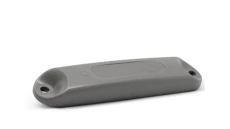
Yes. There are industrial RFID tags designed for metal, temperature, humidity, chemical products, shocks, vibrations or cleaning processes. The choice of tag and reading configuration is key to ensuring the reliability of the system.

Yes. RFID enables the identification, location, and control of assets such as tools, molds, cars, containers, racks, cages, fixtures, equipment, or returnable packaging, reducing losses and search times.

Yes. An industrial RFID solution can connect with enterprise management, warehouse, production or maintenance systems to automate records, update stock, validate movements and maintain digital traceability of the process.

The RFID can be applied in automotive, food, chemistry, metallurgy, electronics, machinery, energy, industrialized construction, textiles, logistics, packaging and any environment where it is necessary to control products, materials, assets or processes.

You may also be interested in

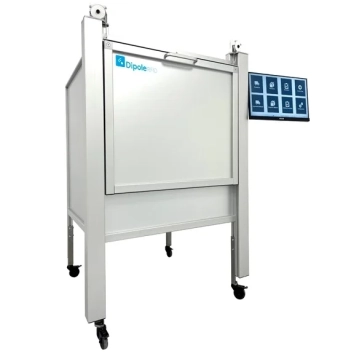
Dipole Cubic RFID UHF

Dipole Cubic RS-1100 RFID

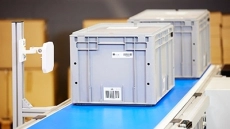
The Cubic RS-1100 is made of aluminum and consists of four universal RFID antennas, along with a four-port RFID reader. Additionally, it includes an application software that can be integrated with any management or ERP system, enabling task automation and reducing errors in inventory management. It also facilitates efficient management of goods receiving and dispatching. Preferred applications and uses of Cubic RFID include: Receptions Shipments Picking Logistics processes Plastic containers Cardboard boxes Product Code: Dipole Cubic: RS-100-4P
See more double_arrow
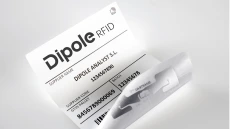
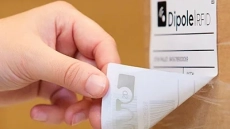
RFID Labels Standard Dipole Miniature

RFID Standard Labels

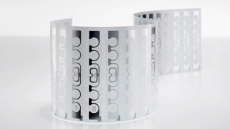
Standard RFID labels consist of an inlay, the material that covers it and the necessary adhesive. We manufacture according to requirements and we can modify the delivery formats. They can be printed and coded on any printer on the market.
See more double_arrow
Contact Dipole

Can we help you?

Find the RFID solution or product that meets your business needs. Ask us to help you make the right decision.

No results