












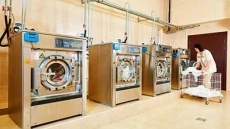






RFID Hospitals Banner

RFID Hospital

RFID Solutions for Hospitals

Dipole offers a comprehensive solution for hospital management using RFID technology, aimed at enhancing efficiency, controlling inventory, increasing patient safety, and managing assets. With RFID technology, hospitals can automate their processes, reduce errors, and improve patient care.

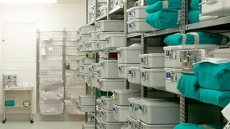
We achieve precise and automated hospital material inventory control, enabling us to monitor medication expiration dates and manage the pharmacy on each floor. We also ensure proper traceability of blood and tissue samples by accurately identifying each sample along with its corresponding patient and all the processes it has undergone.

At Dipole, we also develop our own software, Lama, to manage all the information generated within the hospital environment using RFID at any given time.
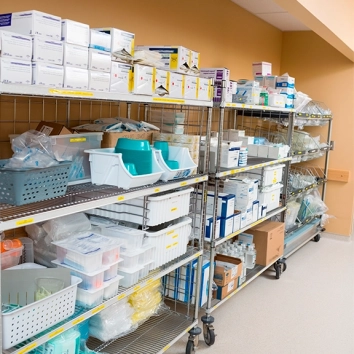
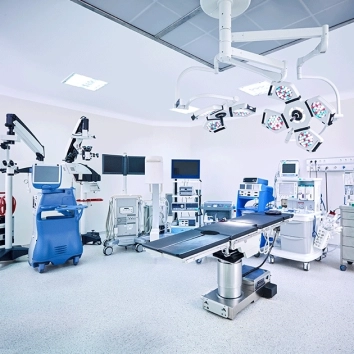
Inventory of hospitals with RFID

Hospital Asset Management

In the hospital environment, asset control is essential to ensure efficient medical care and patient safety. Hospitals can track and manage a wide variety of assets, from medical equipment to medication supplies.

With RFID, we can achieve more efficient and accurate management of medical equipment and uniforms, among others. By tagging each item with RFID labels, we can maintain a detailed record of their real-time location and status. This enables hospital staff to quickly locate necessary items and prevent the loss or misplacement of critical equipment.

Effective asset management in a hospital significantly boosts efficiency within the facility, and with RFID technology, we achieve this without active personnel intervention, thereby reducing their workload and eliminating potential human errors

asset management in hospitals with RFID

Patient Monitoring with RFID

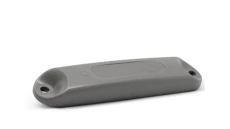
Dipole designs tags that are used as patient wristbands, enabling constant and uninterrupted monitoring of their location and condition.

Furthermore, the use of RFID can significantly enhance efficiency in the processes of patient admission and discharge. RFID systems help quickly identify patients and their medical history, reducing wait times and improving the quality of care.

It's another aspect of healthcare; RFID unquestionably adds value to the monitoring of processes involved in clinical analyses, tracking blood bags, controlling cultivation processes in GMP laboratories, and any other type of sample.

Identification of patients in hospitals with RFID

Benefits of RFID technology in hospitals

Traceability and automatic identification

The RFID solutions for Hospitals and healthcare centers automatically identify products, lots, assets or logistics units and record origin, location, status, movement and destination to offer a reliable end-to-end traceability.

Accurate Inventory and Stock

RFID in Hospitals and healthcare centers allows for faster inventory and maintaining updated stock, reducing differences between physical inventory and the system and facilitating replenishments, recounts and real-time availability.

Validation and error reduction

RFID validation in hospitals and healthcare centers helps detect incorrect references, quantities, lots, orders, assets, or movements before they generate incidents in reception, preparation, production, shipment, or delivery.

Automation and operational efficiency

By automating readings and records, RFID reduces repetitive manual tasks in Hospitals and healthcare centers, accelerates work flows and improves productivity in warehouse, production, logistics or service operations.

Asset, Equipment, and Returnable Control

RFID facilitates the control of assets, equipment, tools, containers, pallets, or other reusable items in Hospitals and healthcare centers, registering location, use, movements, returns, and maintenance to avoid losses and unnecessary purchases.

Quality, security and compliance

With RFID, Hospitals and healthcare centers improve quality, security, compliance and audits by linking each reading with controls, incidents, reviews, conservation, expiration, documentation or internal requirements for traceability.

Real-time visibility and integrated data

Rfid readings for hospitals and healthcare centers are integrated with ERP, WMS/SGA, MES, GMAO, CRM, LIMS or other systems, converting each physical movement into reliable, visible and actionable operational data in real-time.

More agile, cost-effective and scalable operation

RFID converts the hospital and healthcare center operation into a more agile, cost-effective and scalable process, with less operational friction, better service, greater control and a solid foundation to grow without relying on manual registration.

Complete RFID Solution for Hospitals

1

IDENTIFICATION

We offer RFID solutions at Dipole to uniquely identify patients, healthcare personnel, medical instruments, medications, biological samples, hospital clothing, critical assets, and clinical use materials, facilitating traceability within hospitals, clinics, and healthcare centers.

2

DETECTION

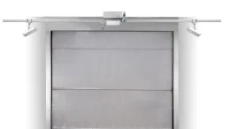
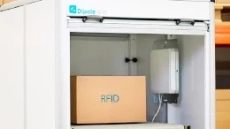
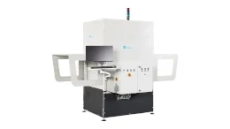
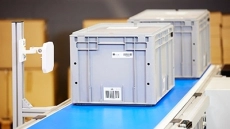
We integrate RFID readers, antennas, tunnels, arches, and portable devices to detect movements, entries, exits, locations, and inventory of hospital materials in real-time, without direct visual contact and faster than manual or barcode-based systems.

3

MANAGEMENT

We connect RFID technology with hospital management systems to automate inventory, control assets, reduce losses, improve availability of critical materials and strengthen security in processes such as sterilization, pharmacy, laundry, laboratory, operating room or internal logistics.

Applications of RFID in hospitals and medical centers

FAQs about RFID solutions for healthcare centers

RFID enables identification and control of medical supplies, equipment, medications, medical devices, beds, vehicles, hospital uniforms, samples, mobile assets, and logistics units in warehouses, operating rooms, pharmacies, sterilization, maintenance, and clinical units.

Hi. Equipment such as infusion pumps, monitors, wheelchairs, stretchers, ultrasound machines, defibrillators or shared devices can be identified to improve their location, availability, maintenance and assignment.

RFID can be applied to instruments, trays, sets, containers, and surgical kits to control use, cleaning, sterilization, storage, availability, and return.

Yes. Allows registering the passage of trays, kits or instruments by phases such as reception, washing, preparation, sterilization, sterile storage, dispatch to operating room and return.

Hi. The RFID identification of textiles allows controlling uniforms, linens, gowns, sheets or surgical textiles during washing, distribution, use, replenishment and withdrawal.

It can be used to improve the traceability of implants, prosthetics, medical devices, kits or high-value medical products, especially in storage, operating room, consignment or repose.

RFID can identify tubes, boxes, grates, containers or sample transport units, helping to control their location and movement between collection, laboratory, storage or analysis.

You can replace it in some processes or coexist with it. RFID adds more value when rapid reading, massive reading, non-contact visual identification or automatic control of assets is needed.

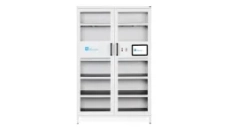
Depends on the process. Some applications work with portable readers, while others require fixed readers, antennas, smart cabinets, portals or reading points at access points, warehouses, operating rooms or sterilization.

S. Dipole can integrate RFID reads with ERP, warehouse systems, pharmacy, CMMS, sterilization, asset management, maintenance or internal platforms of the healthcare center.

Contact Dipole

Can we help you?

Find the RFID solution or product that meets your business needs. Ask us to help you make the right decision.

No results