













RFID In the Food Industry Banner

RFID Food

Achieving traceability with RFID

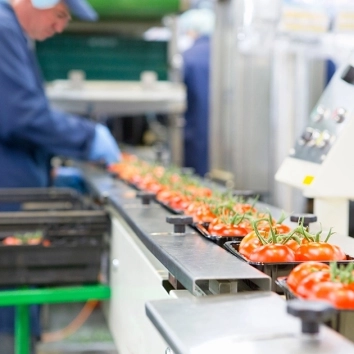
When we talk here about food, we are referring to the industries that carry out procedures for processing, packaging and storing food products.

Due to its own food safety regulations, this type of industry needs to add a series of data to each manufactured product to obtain traceability. Thus, key data such as:

  • Best-before dates
  • Packaging or production batches
  • Variable weights, gross and net weights
  • Recording of conditions such as temperature, humidity or others
RFID In the Food Industry

Processes where RFID adds value

  • Identifying codes, dates and supplier batches upon reception
  • Capturing data during processing
  • Labelling according to traceability regulations
  • Obtain full visibility of the productivity
  • Avoid obsolete or out-of-date stock with proper inventory alert management
  • Guarantee shipments to your customers
  • Integrate real-time movements and data with your IT system, ERP, MES, WMS or other systems

There is no doubt that the emergence of RFID technology applied to the food sector has streamlined and optimised all processes in the chain from start to finish and provides real-time data that ensures food safety and compliance with traceability regulations. Some of the processes where RFID adds value are:

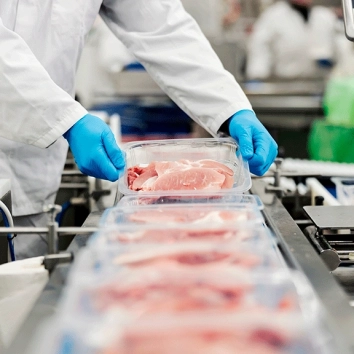
meat packaging with RFID

Food Traceability and Lot Control

  • Traceability RFID throughout the entire food chain
  • Lot control and expiration dates with RFID
  • Management of withdrawals, incidents, and food recalls
  • Quality control and regulatory compliance with RFID technology
  • Allergen control and product segregation

Warehouse, inventory, and order preparation

  • Inventory control RFID for raw materials and finished products
  • Receipt control of raw materials
  • Location and control of storage locations in food warehouses
  • Order preparation in refrigerated or dry environments
  • Verification of food loads and shipments

Production, critical assets, and returnable packaging

  • Production control in progress — WIP — in food processes
  • Critical asset management: containers, cars, molds, trays or cages
  • Trackability of returnable containers and reusable elements
  • Optimization of productive and logistical processes
  • Reduction of waste and product losses

Cold Chain, Integration, and Digitalization

Temperature chain control with RFID and sensors

RFID integration with ERP, WMS and MES

Food product authenticity and protection

Applications of RFID in the Food Sector

RFID in Meat Industry

Lot tracking, camera control, fresh or frozen product, shipments and reusable assets.

RFID in Dairy Industry

Control of raw materials, lots, expirations, refrigerated chambers, packaging and distribution.

RFID Beverages and bottling

Product traceability, control of pallets, boxes, returnable containers, warehouses and shipments.

Conservas and packaged food

Batch control, expirations, references, warehouses, order preparation and distribution.

Fresh, refrigerated, and frozen food

RFID cold chain control, lots, stock, locations and shipments of fresh, refrigerated and frozen products to ensure complete traceability in controlled temperature environments.

Ingredients, additives and raw materials

Receiving control, lots, suppliers, locations, internal consumptions and documentary traceability.

Logistical Food Operators

Warehouse management, cameras, reception, order preparation, shipments and traceability between centers.

Reusable Food Containers

Control of boxes, crates, poles, cars, containers, and other reusable assets.

Benefits of RFID in Food Sector

Higher food traceability

MORE precise tracking of references, lots, series, suppliers, processes and destinations.

Less manual errors

Automation of readings and validations in reception, production, warehouse and dispatch.

More reliable inventory

Updated visibility of real stock in dry, refrigerated, or frozen warehouses.

Better expiration control

More efficient batch management, consumption dates and FIFO/FEFO criteria.

Fastest response to incidents

Quick localization of affected products in the face of recalls, quality alerts or audits.

More logistical efficiency

Order preparation, faster and safer load verification and shipments.

Integration with existing systems

Connection with ERP, WMS, MES or other management platforms.

FAQs about RFID solutions for feeding

The RFID serves to identify and automatically control raw materials, products, lots, assets, locations and shipments. It allows for improved food traceability, reduces manual errors and increases operational visibility.

RFID allows to associate each product, box or pallet with information such as batch, expiration date, supplier, location, status or destination, facilitating FIFO/FEFO management and sensitive product control.

Yes. There are RFID tags, readers and configurations adapted to refrigerated, frozen or demanding humidity and temperature environments. The choice of technology depends on the product, packaging and reading process.

In many processes it can complement or replace it. The main advantage of RFID is that it allows reading multiple identifications at a distance and without direct visual contact, which speeds up inventories, receptions, shipments and logistical controls.

Yes. An RFID solution can connect with enterprise management systems, warehouse or production to automate records, update stock, validate movements and maintain digital traceability of the process.

Manufacturers, logistics operators, refrigerated warehouses, fresh, frozen, packaged, beverage, meat, dairy, canning, or companies that manage assets and returnable packaging.

You may also be interested in

Contact Dipole

Can we help you?

Find the RFID solution or product that meets your business needs. Ask us to help you make the right decision.

No results