
























RFID Libraries

RFID Libraries

Automation RFID for libraries, documentary funds and loan spaces

Libraries manage thousands of books, journals, documents, audiovisual materials, special collections, and circulating items. Each loan, return, reservation, re-shelving, or inventory requires precision so that the catalog reflects the physical reality of the collection. When these processes depend only on barcodes, manual records, or visual checks, the team spends a lot of time on repetitive tasks and errors in location, inventory discrepancies, or misplaced items appear.

The RFID technology allows each item to be identified quickly, without direct visual contact and with multiple readings, improving the daily management of the library.

Libraries with RFID

Automatic Loans and Returns

The implementation of RFID technology in libraries makes a difference in the management of loan and return of materials, significantly improving the efficiency and accuracy of the process.

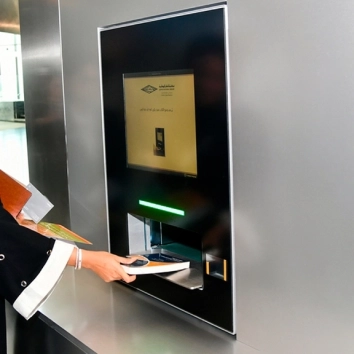
RFID systems enable the automation of loans and returns, allowing users to perform these operations autonomously. This functionality not only relieves the workload of library staff but also provides a faster and more accessible service for users.

Another notable benefit is the ability to update the status of these materials at the moment the loan or return is made and to provide all users with real-time availability, optimizing library management and enhancing the user experience.

return books in RFID libraries

Benefits of RFID technology for libraries

Traceability and automatic identification

Rfid solutions for libraries identify automatically products, lots, assets or logistics units and record origin, location, status, movement and destination to offer a reliable traceability from end to end.

Inventory and more accurate stock

RFID in Libraries allows for faster inventory and maintaining the updated stock, reducing differences between the physical inventory and the system and facilitating replenishments, recounts and real availability.

Validation and error reduction

RFID validation in Libraries helps detect incorrect references, quantities, lots, orders, assets or movements before they generate incidents in reception, preparation, production, shipment or delivery.

Automation and operational efficiency

By automating readings and records, RFID reduces repetitive manual tasks in Libraries, accelerates workflow and improves productivity in warehouse, production, logistics or service operations.

Asset, Equipment, and Returnable Control

RFID facilitates the control of assets, equipment, tools, containers, pallets, or other reusable items in Libraries, recording location, use, movements, returns, and maintenance to avoid losses and unnecessary purchases.

Quality, security and compliance

With RFID, Libraries improves quality, security, compliance and audits by linking each reading with controls, incidents, reviews, conservation, expiration, documentation or internal requirements of traceability.

Integrated Data and Real-Time Visibility

The RFID readings for Libraries are integrated with ERP, WMS/SGA, MES, GMAO, CRM, LIMS or other systems, converting each physical movement into reliable, visible, and actionable operational data in real-time.

More agile, cost-effective and scalable operation

RFID converts the library operation into a more agile, cost-effective and scalable process, with less operational friction, better service, greater control and a solid base to grow without relying on manual registration.

Complete RFID solution for libraries, archives, and document centers

1

IDENTIFICATION

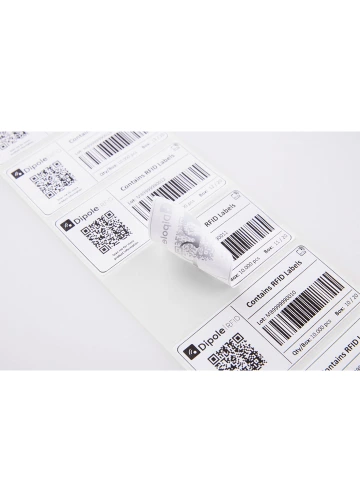
We offer RFID tags for books, magazines, documents, audiovisuals and other library materials, allowing each item to be uniquely identified and streamline borrowing, return, inventory and location processes within the library.

2

DETECTION

We design RFID solutions for libraries with readers, antennas, security arches and portable devices that allow detecting entries, exits, movements and inventory of bibliographic materials quickly, accurately and without the need for direct visual reading.

3

MANAGEMENT

We connected RFID technology with the library management system to automate loans, returns, stock control, anti-theft security and inventory, reducing manual tasks and improving user and librarian experience.

Applications of RFID in libraries

FAQs about RFID solutions for libraries and archives

RFID for libraries is an automatic identification solution that allows controlling books, magazines, documents, audiovisual materials and other collections through RFID tags, readers, antennas, security arches and integrated software with the library system.

Serves to expedite loan and return, perform rapid inventories, locate items, detect misplaced books, improve security and automate repetitive processes.

It can be replaced or coexist with it during a transition phase. RFID provides contactless reading and allows for identifying multiple specimens faster than with bar code.

Sí. The libraries can perform a conversion process in which each existing copy receives an RFID tag linked to its catalog record.

Books, magazines, documents, CDs, DVDs, audiovisual materials, tablets, educational kits, special funds, internal files, and other lendable or inventoryable materials.

They can register loans and returns autonomously, scanning multiple copies at once.

Sí. The RFID security gates can detect items that are removed without being properly checked out or authorized.

Yes. The solution can be integrated with the SIGB or library software to update loans, returns, reservations, availability and inventory.

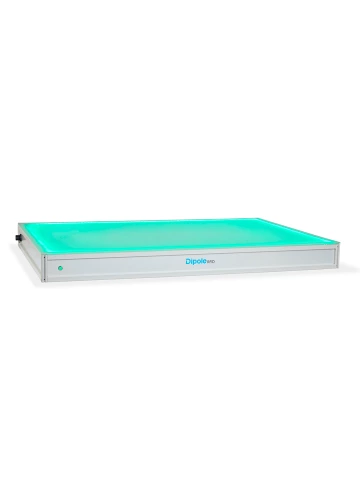
You may need RFID tags, encoding stations, desktop scanners, handheld scanners, self-service kiosks, smart mailboxes, anti-theft arches, and integration software.

Contact Dipole

Can we help you?

Find the RFID solution or product that meets your business needs. Ask us to help you make the right decision.

No results