


















RFID Laboratory Banner

RFID Laboratory

RFID technology for safety and efficiency in laboratories

RFID technology in laboratories allows precise identification and tracking of the different items and materials in the laboratory. Being able to easily and effectively identify laboratory equipment, samples, sensitive materials and the people involved in laboratory processes helps to avoid errors and improve efficiency in their handling and use.

With the implementation of RFID technology in laboratories, you obtain a quick and easy reading of information, resulting in a reduction of the time and effort required to perform certain tasks. In addition, the use of RFID technology also helps improve safety in the laboratory by enabling more accurate tracking and control of hazardous items and materials.

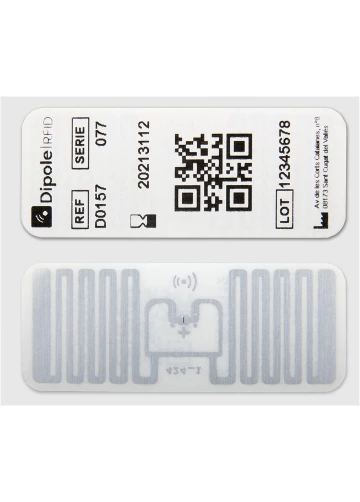
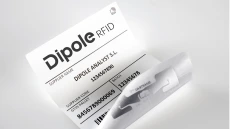
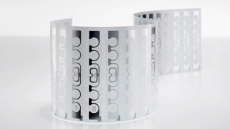
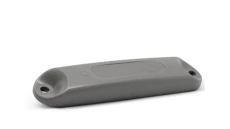
Dipole has designed specific RFID tags resistant to the chemicals and extreme temperatures used in laboratories.
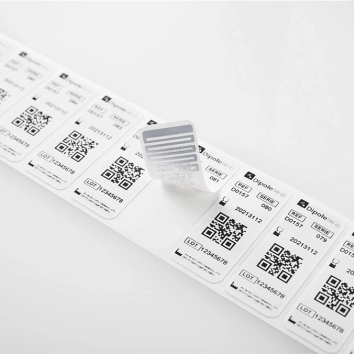
RFID laboratory vial label

Resistance to freezing, chemical and sterilisation processes


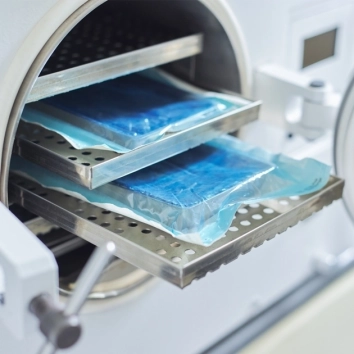
To achieve complete identification in laboratories, Dipole has developed RFID tags that can withstand the high temperatures and pressure generated during disinfection and sterilisation.

RFID tags have also been developed so that they can be subjected to freezing processes and their performance is not affected by temperatures.

The other major problem that we resolve with the family of RFID tags for laboratories is resistance to the chemicals used that can damage them.

Thanks to the whole set of RFID tags designed by Dipole, we can guarantee the use of RFID in the whole laboratory environment.

Autoclave in laboratory

Benefits of RFID technology in laboratories

Traceability and automatic identification

The RFID solutions for Laboratories automatically identify products, lots, assets or logistics units and record origin, location, status, movement and destination to provide a reliable end-to-end traceability.

More accurate inventory and stock

RFID in Laboratories allows for faster inventory and maintaining the updated stock, reducing differences between the physical inventory and the system and facilitating replenishments, recounts and real-time availability.

Validation and error reduction

RFID validation in Laboratories helps detect incorrect references, quantities, lots, orders, assets or movements before they generate incidents in receipt, preparation, production, shipment or delivery.

Automation and operational efficiency

By automating readings and records, RFID reduces repetitive manual tasks in Laboratories, accelerates work flows and improves productivity in warehouse, production, logistics or service operations.

Asset, Equipment, and Returnable Control

RFID facilitates the control of assets, equipment, tools, containers, pallets, or other reusable items in Laboratories, recording location, use, movements, returns, and maintenance to avoid losses and unnecessary purchases.

Integrated Data and Real-time Visibility

The RFID readings for Laboratories are integrated with ERP, WMS/SGA, MES, GMAO, CRM, LIMS or other systems, converting each physical movement into reliable, visible and actionable operational data in real-time.

More Agile, Cost-Effective, and Scalable Operation

RFID converts the operation of Laboratories into a more agile, cost-effective, and scalable process, with less operational friction, better service, greater control, and a solid foundation to grow without relying on manual registration.

Quality, security and compliance

With RFID, Laboratories improves quality, security, compliance and audits by linking each reading with controls, incidents, reviews, conservation, expiration, documentation or internal requirements for traceability.

Complete RFID Solution for Laboratories

1

IDENTIFICATION

We offer RFID solutions at Dipole to uniquely identify samples, tubes, vials, plates, reagents, kits, instruments, laboratory assets, critical equipment, and consumable materials, ensuring precise traceability in every phase of the analytical, clinical, pharmaceutical, or research process.

2

DETECTION

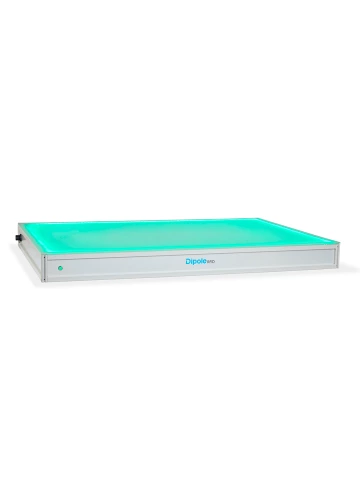
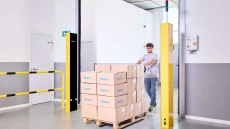
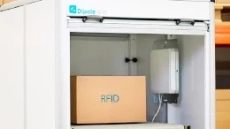
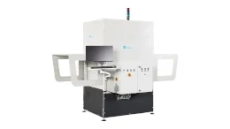
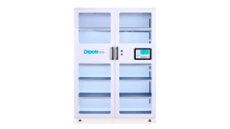
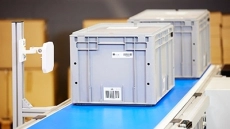
We integrate RFID tags, readers, antennas, tunnels and automatic reading devices to detect samples, materials and assets within the laboratory, without the need for direct visual contact and with the ability to perform fast, massive and reliable readings even in environments with high rotation of elements.

3

MANAGEMENT

We connect RFID technology with LIMS, ERP, WMS or internal laboratory platforms to automate inventory, control locations, register movements, reduce identification errors and improve the traceability of samples, reagents, equipment and critical processes.

RFID labels for vials

FAQs about RFID solutions for laboratories

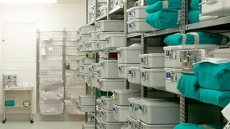
RFID enables identification and control of samples, tubes, grates, boxes, reagents, consumables, equipment, cameras, counter-samples, shipments, and laboratory assets during reception, analysis, storage, maintenance, and exit.

Yes. Each sample, box, grate, or container can be associated with source data, date, location, status, analysis, project, responsible person, or destination.

Yes, although the solution must adapt to size, material, temperature, and reading form. In some cases, the individual sample is identified and in others, the box, grid, rack, or container that groups several samples.

Yes, as long as suitable tags or labels are selected for the real conditions of conservation, temperature, humidity, surface, and handling.

Yes. The reagents can be associated with batch, expiration date, opening date, location, supplier, status or consumption, making inventory and restocking easier.

Si. Dipole can integrate RFID reads with LIMS, ERP, CMMS, quality systems, warehouse or internal platforms to update samples, locations, statuses, analyses or assets.

You can replace it in some processes or coexist with it. RFID adds more value when contactless reading is needed, reading of groups, fast inventory or automatic movement control.

Depends on the process. The individual sample, tube, plate, box, grid, rack, container, or transport unit can be identified.

It allows to identify teams, instruments, pipettes, balances, centrifuges, measurement devices or shared assets to control location, use, maintenance and calibration.

Yes. Each team can link to its revision history, calibrations, incidents, repairs, responsible person, or operational status.

Yes. It can help control boxes, racks, locations and movements of stored samples over long periods, always adapting the tag to the environment and the level of traceability required.

Depends on support and environment. Tags can be used for tubes, boxes, racks, plates, reagents, equipment, containers or technical assets, including solutions resistant to cold, humidity, chemicals or complex surfaces.

Contact Dipole

Can we help you?

Find the RFID solution or product that meets your business needs. Ask us to help you make the right decision.

No results