
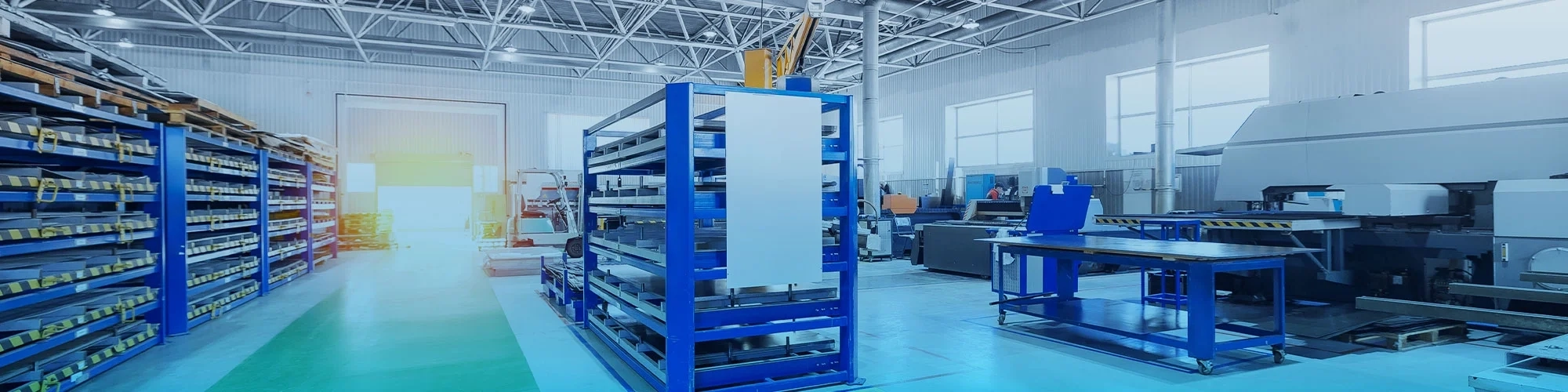
Smart RFID Kanban System: Dipole’s Solution for Real-Time Inventory Management
In the era of Industry 4.0, companies need solutions that guarantee efficiency, traceability, and automation in materials management.
Dipole’s RFID Kanban Solution combines the Kanban philosophy—optimizing workflows through visual signals—with RFID technology to digitalize and automate material replenishment.
This integration creates a system capable of reducing costs, eliminating human errors, and providing full visibility of real-time inventory.
What Is an RFID Kanban System?
The RFID Kanban replaces traditional Kanban cards with unique RFID tags.
These tags identify each bin, box, or container with precision, automatically recording movements and consumption.
How it works:
· Operators place empty bins on the RFID Kanban shelf or mailbox.
· An RFID reader detects their status and sends data to the central system.
· The ERP/MRP automatically generates a replenishment or production order.
The result: an agile, paperless, and fully automated process that ensures materials are always available at the production line.

Components of the Dipole Solution
RFID Smart Kanban Shelf
One of Dipole’s standout applications is the RFID Smart Kanban Shelf, designed for manufacturing environments:
· RFID-tagged bins for unit-level traceability.
· Upper shelf with integrated RFID reader detecting empty bins automatically.
· Instant communication with ERP/MRP to trigger replenishment orders.
With this solution, production never stops due to lack of components.
Examples of RFID Kanban Applications
The system’s versatility makes it suitable for multiple sectors:
· Warehouses: Inventory control and automatic replenishment.
· Hospitals: Management of medications and consumables.
· Manufacturing: Tracking components and spare parts.
· Logistics: Traceability of pallets and containers in transit.
Dipole RFID Labels
Dipole designs and manufactures custom RFID tags for every application.
An example: Dipole Pro-90 RFID tags, ideal for logistics, retail, and industry:
· Global UHF 860–960 MHz frequency.
· Excellent performance on cardboard and plastic.
· International standards: EPC Class 1 Gen 2, ISO 18000-6C.
· Resistant to -40°C to +150°C.
These tags ensure fast and reliable reads throughout the supply chain.
LAMA Middleware: The Brain of the Solution
Dipole’s LAMA Middleware connects RFID hardware with management systems (ERP, MES, WMS):
· Controls readers, antennas, printers, and PDAs.
· Filters false readings intelligently.
· Integrates flexibly via REST, SOAP, WebSocket, XML, or JSON.
· Centralized DataSuite for consolidating multiple capture points.
· Real-time monitoring with automated alerts.
With LAMA, companies gain a scalable, reliable, and adaptable platform for any industrial scenario.
Key Benefits:
· Full automation: no manual counts or verbal requests.
· Real-time inventory visibility.
· Improved operational efficiency and reduced bottlenecks.
· Accurate tracking of consumption and replenishment.
· Reduced costs: fewer stockouts, obsolescence, and downtime.

The Dipole RFID Kanban takes your company from manual control to intelligent, automated management.
FAQ – Frequently Asked Questions
What is an RFID Kanban System?
It replaces physical Kanban cards with RFID tags that automatically trigger replenishment signals and update inventory in real time.
What does Dipole’s solution include?
RFID tags, shelves or mailboxes with UHF readers, antennas, and LAMA middleware integrated with ERP/MES/WMS.
How is it integrated with ERP/MES/WMS?
Through REST/SOAP APIs, WebSocket, and standard connectors. LAMA publishes consumption and replenishment events and synchronizes stock and orders.
What measurable benefits can I expect?
Fewer stockouts, shorter lead times, higher inventory accuracy, and fewer manual tasks. ROI depends on the number of replenishment cycles.
Does it work with metal or plastic containers?
Yes, using on-metal or specific tags for plastic/cardboard, and optimized antenna positioning.
How does it differ from barcode systems?
RFID offers automatic, line-of-sight-free reading—faster, more accurate, and enabling automatic replenishment.
What’s needed for a pilot?
1 shelf or bin, 1 UHF reader, 50–100 tags, and a basic ERP/MES integration. KPIs are defined and impact is measured.
What standards do the tags support?
EPC Class 1 Gen 2 / ISO 18000-6C, UHF 860–960 MHz, Impinj Monza M730/MR6P chips.
How do you prevent false readings?
LAMA uses intelligent filtering, power control, and event-based logic to minimize ghost or duplicate reads.
Can it scale to multiple areas or plants?
Yes. With LAMA and DataSuite Central, multiple reading points can be added and consolidated across locations.