
























In the coming years, selling a product in the European Union will mean something more than complying with a regulation, passing quality checks, or providing technical documentation when requested. It will become increasingly important to be able to demonstrate, with reliable data, where a product comes from, what it is made of, what journey it has followed, and what can happen to it at the end of its useful life.
This is the context in which the Digital Product Passport emerges, also known as the DPP. The idea is simple to understand: that a product can have an associated digital identity — accessible and structured — bringing together key information on sustainability, traceability, repair, recycling, and compliance.
For many companies, the DPP may still sound like a distant concept. However, the European regulatory framework is already underway, and the European Commission has defined priorities for the coming years. The best way to prepare is not to wait until the last moment, but to start with something much more practical: organizing product data and connecting that information with what actually happens on the factory floor, in the warehouse, in transport, and in use.
Quick answer
The EU Digital Product Passport will be a digital record associated with a product. Its function will be to provide reliable information on identity, composition, sustainability, traceability, and compliance. Not all products will have the same requirements or the same timeline, but the direction is clear: more data, more transparency, and greater tracking capability throughout the product lifecycle.
What the Digital Product Passport is
The Digital Product Passport is a way of connecting the physical product with digital information useful to different audiences: consumers, manufacturers, distributors, repairers, recyclers, authorities, and other actors in the value chain.
In practice, this isn't about creating a simple product web page. The DPP aims for information to be structured, verifiable, and updatable, so that it can serve both to inform and to demonstrate compliance.
The same product may need to show different information depending on who consults the passport. A consumer might need usage instructions, composition, or recycling recommendations. An authority may require conformity data. A logistics partner or repairer may need more operational information. The key is that the product has a clear identity and that the data is well governed.
Why the EU is driving the DPP
The DPP is part of a broader European strategy to move toward more sustainable, repairable, traceable, and circular products. The European Union wants relevant product information to stop getting lost among internal documents, suppliers, technical sheets, or disconnected systems.
The goal is for information to accompany the product for longer and help people make better decisions: buying with more transparency, repairing more easily, reusing when possible, and recycling more effectively.
From a business standpoint, this represents a major shift. Data stops being purely an internal resource and starts becoming part of the product itself. Anyone who manufactures, imports, or distributes certain products will need to take care not only of the physical product, but also of the quality of the information that accompanies it.
Key idea for businesses
The DPP shouldn't be seen solely as a documentation obligation. Approached well, it can become an opportunity to improve traceability, inventory control, operational efficiency, brand transparency, and audit readiness.
Which products may be affected
The rollout of the Digital Product Passport will be gradual and will depend on each category. The European Commission has identified priority groups as products with high potential impact on the circular economy, such as textiles, furniture, mattresses, tires, steel, and aluminum, in addition to energy-related products.
Batteries, for their part, are one of the first major examples of a mandatory digital passport, with specific requirements within their own regulation. This has led many companies in other sectors to watch the battery case as a practical reference for preparing their own data systems.
The important question for a company isn't just "when will it be my turn," but "how prepared am I to demonstrate my product information when the time comes."
Sectors that should start paying attention to the DPP
Although the final details will depend on each delegated act, there are sectors where early preparation makes a lot of sense:
- Textiles, footwear, and fashion, due to the importance of composition, origin, circularity, and recycling.
- Furniture and mattresses, due to materials, repairability, durability, and end-of-life considerations.
- Industry and metals, due to traceability of materials, processes, and complex supply chains.
- Electronics and component-based products, due to repair, substances, maintenance, and recovery.
- Batteries and electric mobility, due to the specific regulatory timeline and the need for lifecycle data.
What information a DPP may include
The exact content will depend on the product category. Even so, there are broad information blocks that recur whenever the Digital Product Passport is discussed.
- Product identity: model, reference, batch, serial number, specific unit, or unique identifier.
- Composition and materials: what the product contains and what information is relevant for repair, recycling, or safety.
- Origin and manufacturing: data on facilities, processes, suppliers, or relevant production stages.
- Sustainability: recyclability, recycled content, durability, environmental footprint, or end-of-life instructions, where applicable.
- Traceability: movements, transformations, aggregations, maintenance, repairs, or important lifecycle events.
- Compliance: certificates, declarations, conformity documentation, and evidence needed for audits or authorities.
The challenge isn't just having that information. Many companies already have part of this data in their ERP, WMS, PLM, spreadsheets, supplier certificates, or quality documentation. The real challenge is connecting the data, keeping it up to date, and reliably associating it with the correct product.
Where RFID fits into the Digital Product Passport
RFID is not the Digital Product Passport. RFID is a technology that can help feed the DPP with more reliable information, especially when a company needs to identify products, boxes, pallets, assets, or components without relying on manual processes.
In a real-world scenario, the DPP needs to answer very specific questions: what product it is, when it was manufactured, where it has been, which batch it was grouped into, when it left the warehouse, whether it has been repaired, or whether it has undergone a particular process. RFID helps capture part of that history automatically.
How to explain it simply
The DPP is the product's "living record." RFID can act as one of the systems that helps identify the physical product and record traceability events without always relying on manual readings, one-by-one scans, or data entry by an operator.
What RFID can bring in practice
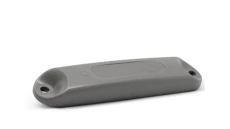
- Unit-level identification of products, components, boxes, or assets.
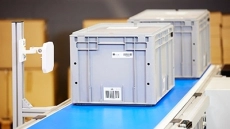
- Bulk reading at manufacturing, warehouse, shipping, or receiving points.
- Fewer manual errors when capturing product movements and states.
- Better internal traceability before publishing any information externally.
- More consistent data for audits, quality, sustainability, and compliance.
In other words: before thinking of the DPP as a digital layer visible to third parties, it's worth reviewing how information is generated within operations. If internal traceability is weak, the digital passport will be weak too.
From physical product to reliable data
One of the major changes introduced by the Digital Product Passport is that it forces companies to look at the product from a lifecycle perspective. It's no longer enough to know that a reference exists in the catalog. In many cases, it will be necessary to better understand what happens to each unit, batch, or product family.
This is where companies can start simply. There's no need to solve the entire DPP on day one. It makes more sense to select one product family, define what information is critical, and create a basic flow connecting identification, event capture, and business systems.
A simple example
Imagine a furniture manufacturer preparing for future sustainable-product requirements. It could start by identifying one specific product line and associating each unit with information on materials, supplier, manufacturing batch, finishes, maintenance instructions, and recycling criteria.
If it also uses RFID in manufacturing or the warehouse, it can record relevant movements and events without relying solely on manual sheets. The result isn't yet a complete, definitive DPP, but it is a solid foundation: an identified product, organized data, and more reliable traceability.
How to start preparing without overcomplicating it
Preparation for the Digital Product Passport should start with a very practical question: does the company know where its important product data lives, and who keeps it up to date?
From there, it's best to proceed in phases. This approach avoids overly large projects, reduces uncertainty, and allows value to be validated before scaling.
- Choose a pilot product family. Better to start with a representative line than try to cover the entire catalog from day one.
- Map the available data. Identify what information sits in ERP, WMS, PLM, technical sheets, certificates, suppliers, or quality systems.
- Define the level of identification. Decide when reference or batch level is sufficient, and when it's worth working at the serialized unit level.
- Review capture points. Identify where traceability can be improved with RFID.
- Separate public and restricted data. Not all information will need to be visible to every user.
- Measure data quality. Completeness, consistency, up-to-dateness, and audit readiness are just as important as the technology chosen.
Recommended starting point
A good first project doesn't have to be huge. It can consist of one product family, one production line, or one specific logistics flow, with reliable identification, traceable events, and an initial view of what data could feed the future DPP.
Common mistakes when preparing the DPP
The Digital Product Passport can become a complex project if approached solely from a regulatory standpoint or solely from a technological one. To do it well, it's worth avoiding some common mistakes:
- Waiting for the category's delegated act before starting. When the details arrive, the company that already has its data organized will move much faster.
- Thinking only about the visible code. The QR code, RFID, or NFC is the entry point; the value lies in the quality of the data behind it.
- Creating a static record that no one maintains. The DPP needs data governance, accountable owners, and update processes.
- Ignoring operations. If the factory, warehouse, logistics, or after-sales service don't capture reliable data, the passport will be incomplete.
- Mixing public and sensitive information. A well-designed DPP must account for different permissions and access levels.
DPP, RFID, and traceability: an opportunity to organize the value chain
The positive way to read the Digital Product Passport is that it can help many companies organize information they already need today but that is often scattered. Preparing for the DPP isn't just about complying with Europe. It can also help improve internal processes.
A company that identifies its products better, captures events with fewer errors, and connects its data systems can gain visibility over inventory, production, returns, maintenance, warranties, and recycling. All of this adds value even before the DPP becomes mandatory for its category.
In this context, RFID fits particularly well when there is volume, physical movement, a need for automation, or unit-level traceability. It doesn't replace a data strategy, but it can be a very useful piece in making it a reality.
How Dipole RFID can help
At Dipole RFID, we work on identification, traceability, and automatic data capture projects in industrial, logistics, retail, healthcare, and other environments where the physical product needs to be connected to reliable information.
When facing the Digital Product Passport, the first step is usually to understand the product's real flow: how it is identified, where it moves, what data is generated, which systems are involved, and what information would make sense to prepare for a future DPP layer.
From there, an RFID pilot can be planned to fit each company's reality, with tags, hardware, software, integration, and data-quality criteria. Technology should serve a clear goal: better-identified products, more traceable processes, and data better prepared for upcoming European requirements
