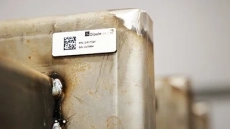

Identifying and tracking metallic assets is one of the biggest challenges in industrial RFID projects. When a standard RFID label is placed on a metal surface, performance usually drops dramatically: read range is reduced, readings become unstable, or the tag cannot be read at all.
On-metal RFID labels (also known as on metal or RFID-on-metal tags) are specifically designed to solve this issue. They incorporate insulating materials and optimized antenna designs to separate the chip from the metal, stabilize the signal, and ensure consistent performance in demanding environments.
In this guide, we explain:
• What you should know before buying on-metal RFID labels
• Why standard RFID labels fail on metal
• What on-metal labels are and why they work
• How to choose the right on-metal label
• Dipole RFID’s on-metal label range (UHF + NFC)
What you should know before buying on-metal RFID labels
Before selecting a model, fixation method, or technology (UHF/NFC), consider the following points:
• On-metal labels are RFID tags designed to operate correctly on metallic surfaces, avoiding the typical performance degradation of standard labels.
• On metal, conventional RFID tags can suffer from reduced read range, unstable readings, and interference.
• On-metal tags solve this using insulating materials and optimized antennas that separate the chip from the metal surface.
• Key selection criteria include size and form factor, environment, required read distance, and QA process.
Dipole RFID expands its portfolio with UHF on-metal RFID labels and NFC on-metal options for mobile-based, close-range reading.

Why do standard RFID labels fail on metal?
Metal directly affects radiofrequency propagation, causing reflections, absorption, and signal cancellation that result in incorrect or missing reads with conventional tags.
Common issues when NOT using on-metal labels:
• Reduced read range
• Unstable or missing reads
• Signal reflections and interference
• Low reliability in critical processes
What are on-metal RFID labels and why do they work?
On-metal RFID labels are designed to operate on metallic surfaces by using:
• Insulating materials that separate the RFID chip from the metal
• Optimized antenna designs that stabilize the RF signal
• Consistent performance in complex or high-density environments
How to choose on-metal RFID labels – checklist
To ensure project success from the first pilot, decide in the following order:
1) UHF or NFC?
• UHF (RFID UHF / EPC Gen2): long-range traceability (inventory, location, automation).
• NFC on-metal: close-range interaction (mobile/tablet), manual verification, maintenance, access to documentation.
2) Surface and environment
• Painted metal, stainless steel, aluminum, vibration, humidity, chemicals, outdoor/indoor use, etc.
3) Size and placement
• Real installation conditions (contact with other parts, stacking) are as important as the label itself. Proper placement accounts for half the success of any on-metal RFID project.
4) Printing/encoding process + QA
• Define who encodes the tags, how validation is performed, and the minimum batch-level quality control.
Quick checklist:
• UHF (long range) or NFC (mobile/proximity)?
• Demanding surface and environment?
• Repeatable placement protected from wear?
• Defined encoding and batch verification?
Dipole RFID range: UHF on-metal labels
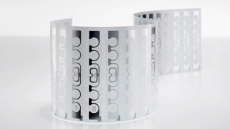
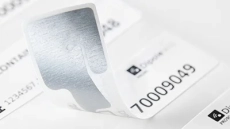
One of the main challenges in the market is finding affordable on-metal RFID labels without sacrificing performance. Dipole RFID expands its range with designs optimized for real-world applications, full UHF RFID standard compatibility, and competitive costs for scalable projects.
UHF on-metal (long-range traceability)
Dipole has developed a new range of on-metal RFID labels with a clear focus: optimized design for real applications, guaranteed UHF RFID standard compatibility, and cost-effective solutions for large-scale projects.
This combination enables integrators and end users to deploy sustainable and scalable RFID traceability projects on metal.
Available references:
• Dipole RFID On-Metal 4021
• Dipole RFID On-Metal 5509 M770
• Dipole RFID On-Metal 5518 M770
• Dipole RFID On-Metal 5633 U9XM

NFC on-metal (mobile-based identification on metal)
Dipole completes its offering with NFC on-metal labels designed for applications where close-range interaction, manual verification, or mobile-based identification is required—even on metal surfaces.
These labels enable reliable NFC reading on metal, making them ideal for identification, authentication, and spot-check processes without the need for industrial readers.
Options:
• Dipole On-Metal NFC Label Ø 35 mm
• Dipole On-Metal NFC Label Ø 25 mm
• Dipole On-Metal NFC Label 30 × 40 mm
Typical applications of on-metal RFID labels
On-metal RFID labels are essential whenever reliable identification of metallic assets is critical, such as:
• Industrial asset traceability
• Tool and equipment control
• Metal container management
• Tracking of technical equipment and machinery
• Identification of racks, carts, and metal structures
Their use enables inventory automation, reduces manual errors, and improves real-time asset visibility.
Industries where on-metal RFID delivers the most value
Thanks to their benefits, on-metal RFID labels are widely used in:
• Industry and manufacturing
• Logistics and transportation
• Healthcare
• Energy and utilities
• Retail and specialized industries with metal fixtures
Benefits of implementing on-metal RFID labels
RFID-on-metal technology improves operational efficiency, traceability, and data-driven decision-making.
Key benefits include:
• Reliable reads on metal
• Higher inventory accuracy
• Reduced losses and misplacement
• Automation of critical processes
• Improved asset visibility and control
Frequently asked questions
What is an on-metal RFID label?
An RFID label designed to work on metallic surfaces using insulating materials and optimized antenna designs to ensure stable reading.
Why don’t standard RFID labels work on metal?
Because metal reflects and absorbs RF signals, causing cancellations and incorrect readings; on-metal labels solve this through specific technical design.
Which industries use on-metal RFID the most?
Industry, logistics, automotive, energy, healthcare, construction, and technical retail—especially for metallic assets, machinery, tools, and reusable containers.
Are on-metal RFID labels more expensive?
Traditionally yes, but Dipole RFID has developed an optimized range that balances performance, durability, and cost for large-scale deployment.
Can they be integrated into existing RFID systems?
Yes. UHF on-metal labels are EPC Gen2 compliant and compatible with existing readers, antennas, and software.
When should NFC On-metal be chosen instead of UHF?
When close-range interaction via mobile/tablet is required for verification, maintenance, or access to asset documentation.
What is most important for correct operation?
The combination of proper fixation, consistent placement, and basic batch-level encoding and read verification.
If you are considering implementing on-metal RFID labels for metallic asset traceability, we can help you select the right reference (UHF or NFC), define installation guidelines, and ensure a reliable and scalable pilot.