

RFID Warehouses Banner

RFID in the Warehouse

Inventory RFID control, locations, and movements in warehouse

In a warehouse, every movement counts. Inbound shipments, locations, replenishments, picking, order preparation, inventory, returns, and shipments generate a large number of daily operations that require reliable data. When these processes depend on manual records, individual barcodes, or visual checks, stock differences, location errors, time losses, and lack of visibility on available merchandise appear. RFID technology allows products, boxes, pallets, containers, assets, or locations to be automatically and massively identified, improving warehouse operational control and reducing errors in critical processes.
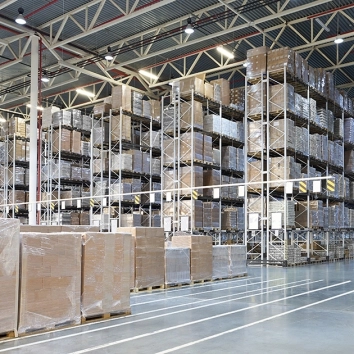
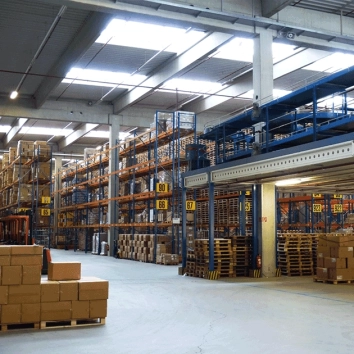
RFID Warehouses

Optimization of Movements and Localization

At Dipole, we provide a comprehensive RFID-based warehouse management solution that covers everything from goods reception to localization and distribution. This solution includes RFID tags, readers, and advanced software, which together enable precise management of each stored product. Additionally, this system adapts to changing business needs, ensuring scalability and flexibility in operations of any size.

Implementing this solution provides unprecedented visibility within the warehouse, facilitating inventory management, instant localization, and product movement. With RFID technology, real-time information can be obtained, enabling companies to detect and resolve issues in their distribution chain, minimize errors, and optimize efficiency in replenishment and distribution processes. This adaptability and efficiency translate into significant cost savings and improvements in overall warehouse productivity.

RFID for warehouses

Identification

Labels

Identification

At Dipole, we manufacture specialized RFID tags that facilitate the identification and individual encoding of items in warehouse environments.    
Readers

Detection

We design and install RFID hardware specifically tailored to ensure outstanding performance in challenging environments such as warehouses, facilitating efficient and accurate detection.  
Software

Management

At Dipole, we integrate the entire RFID solution with Lama, our specialized software, allowing you to manage and analyze all the information generated in the context of warehouses and logistics.  

Processes in Warehouse where RFID adds value

Higher inventory precision

RFID helps to reduce differences between physical stock and stock registered in the system. Automatic reading of entries, exits and internal movements allows working with more reliable information.

Better control of entries and receipts

Automate the identification of received merchandise, validating references, quantities, lots and orders to minimize errors.

Preparation of orders more reliable

RFID allows validating that the selected units correspond to the order before packaging or shipping. This reduces picking errors and subsequent claims.

Safer Expeditions

Barcodes, tunnels or RFID readers can check the prepared goods before shipment, preventing incomplete or incorrect shipments.

Higher operational visibility

Enables real-time knowledge of the status and location of the goods within the warehouse, facilitating decision-making.

Internal Loss Reduction

RFID facilitates detecting deviations, unplanned movements, misplaced assets, or products that disappear between warehouse zones.

Better batch and series management

RFID identification allows linking each unit, box or pallet to batch, series, date, supplier, customer or order information.

Productivity Improvement

Automate identification and control processes, reducing manual tasks and increasing operational efficiency.

FAQs about RFID solutions for warehouse

Serves to automate processes such as reception, location, inventory, picking, order preparation, batch control, asset management, returns and shipping.

The barcode requires individual reading and direct vision of the label. RFID allows for mass readings, faster and without the need to physically see each label, which speeds up inventory, receptions and validations.

RFID does not replace WMS or SGA. It complements by providing automatic data of the physical movement of goods. The RFID solution can be integrated with the warehouse system to update stock, locations and states.

Yes. RFID solutions can be integrated with ERP, WMS, SGA, MES, TMS or proprietary systems via connectors, APIs, middleware or custom developments.

You can label products, boxes, poles, containers, cages, locations, returnable assets, tools, equipment and high-value or critical traceability merchandise.

Depends on the project's objective. It can be tagged at the level of unit, box, paragraph, lot, location or asset. In many projects, more than one level of identification is combined.

In many cases yes. RFID allows to perform cyclic or partial inventories with handheld scanners or fixed reading points, reducing the need to stop the entire operation.

Yes, as long as the technical design is appropriate. The reading will depend on the type of product, material, density, label orientation, antennas, power, distance, and environment.

Yes, but it requires a correct selection of the tag and a specific configuration. The metal and liquids affect the radiofrequency behavior, so adapted labels or tags are used.

Fixed readers, handheld readers, antennas, reading arches, RFID tunnels, RFID printers, encoding stations, tags, labels, and traceability software can be used.

Si. RFID allows to validate that the selected products correspond to the order, reducing reference, batch, size, color, quantity or serial number errors.

Yes. Returns can be quickly identified, associated with order or customer, reviewed and reintroduced to stock with greater traceability.

Yes. Locations can be identified with RFID tags or associated with reading points. This allows registering where the merchandise is located and detecting incorrect movements.

RFID allows to validate boxes, palms or complete orders before leaving the warehouse. This reduces incomplete shipments, loading errors and claims.

It may serve, but the return is usually clearer in warehouses with many references, high rotation, frequent errors, high-value products, expensive inventory, or the need for traceability.

Industry, retail, food, health, automotive, electronics, textiles, logistics, distribution, pharmaceutical, construction and any environment that needs to control stock or assets.

We analyze the time savings in inventories, reduction of errors, reduction of losses, improvement of shipments, lower safety stock and reduction of operational incidents.

Usual is to analyze flows of goods, levels of identification, reading points, physical conditions, existing systems and business objectives. From there, a pilot or technical design is defined.

Because Dipole RFID can provide a complete solution: tags, labels, readers, antennas, printers, software, integration and technically adapted design to the real environment of the warehouse.

Contact Dipole

Can we help you?

Find the RFID solution or product that meets your business needs. Ask us to help you make the right decision.

No results